ServicesNew Construction HVAC
New Construction HVAC in Colfax
Building a new home means a lot of decisions. We help you get heating and cooling right the first time: equipment sized to your floor plan, installed on the builder's schedule, inspected and started up properly. Once you've moved in, we come back to check it and show you how to care for it.
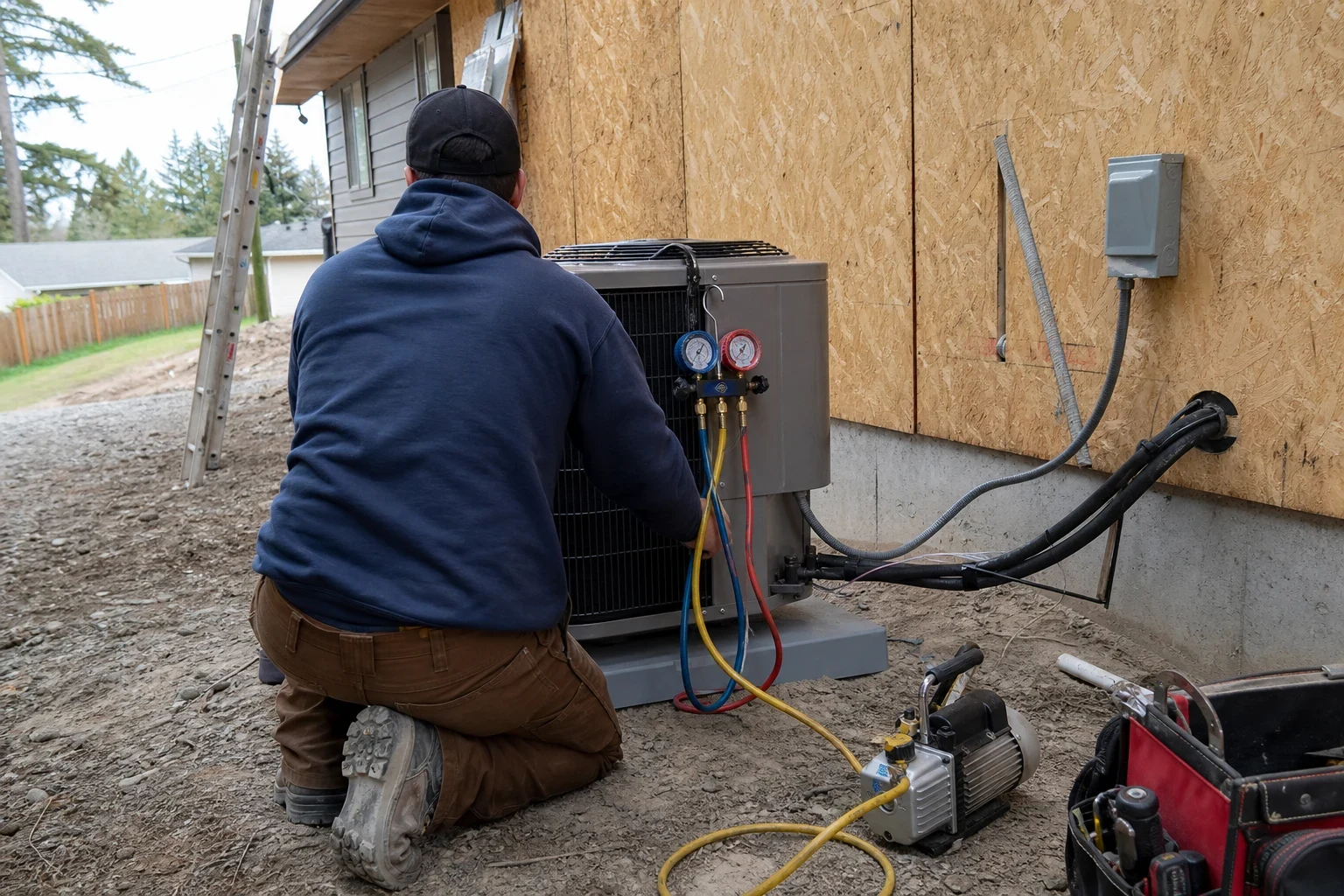
Heating and cooling planned with the house, not added later
A new home is the one chance to choose equipment without working around an old system. We study your plans, figure out how much heating and cooling each part of the house really needs, and recommend equipment to match. For some homes that means gas heat paired with an outdoor cooling unit. Others are better served by a heat pump, by ductless units in certain rooms, or by a combination of the two.
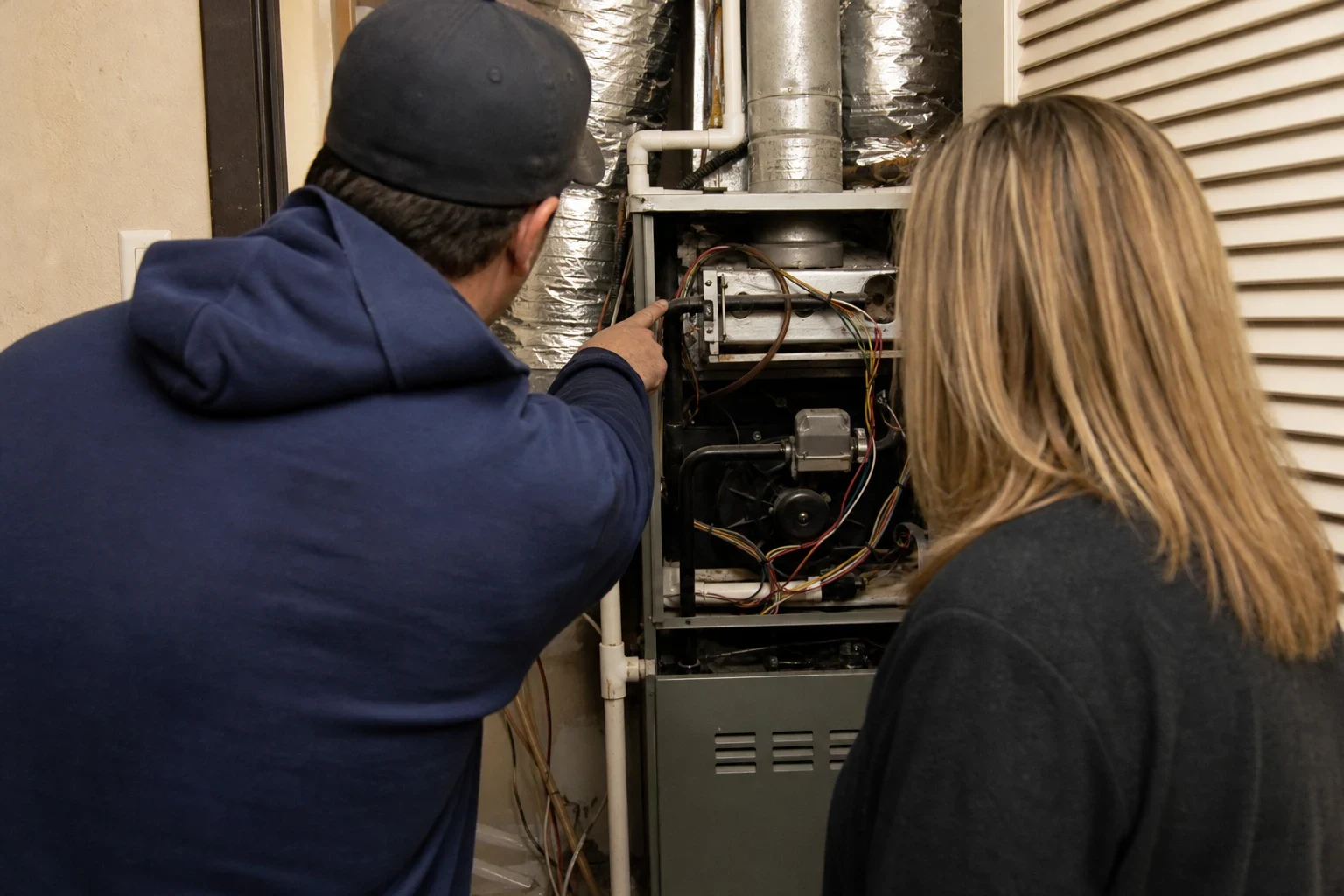
Our team holds a gas heating mechanical license, so gas furnace installs, gas piping to the equipment and venting are handled by us rather than handed off. We work around your builder and other trades so our visits land when the framing and walls are ready for them.
The job doesn't end at startup. Once you've lived in the house through a few weeks of real weather, we check back, look the system over and walk you through filters, thermostat settings and the simple care that keeps new equipment running well.
What our new construction work includes
- Room-by-room load calculation
- We size equipment from your actual plans: square footage, window area, insulation levels and which way the house faces. An oversized system short-cycles and wastes energy, and an undersized one struggles on the coldest nights.
- Equipment selection you understand
- We lay out the options that suit your house and budget and explain the tradeoffs in plain terms. You pick, and the written quote reflects exactly that choice.
- Gas piping and venting
- For gas heat, we run the gas line to the appliance and install the venting under our gas heating mechanical license, sized and routed to pass inspection.
- Rough-in on the builder's schedule
- We set equipment locations, refrigerant line sets, condensate drains and thermostat wiring while walls are open, then return for trim-out once finishes are in.
- Startup, inspection and walkthrough
- We charge and test the system, confirm it's running to spec, meet the inspector, and show you how everything works before you move in.
When it's time to bring us in
Your plans are nearly final
The best time to call is before framing starts. Equipment locations and gas runs are far easier to plan on paper than to fix later.
Your builder asked you to choose an HVAC contractor
Many owner-builders and custom builders let the homeowner pick. We're happy to work alongside your general contractor and share our schedule needs early.
You're weighing a heat pump against gas
New construction is a good moment to decide. We'll compare running costs, comfort in a cold Palouse winter and available rebates so you can choose with real information.
You want comfort in a bonus room or addition
Spaces over garages and large additions often need their own plan. Ductless mini-splits can be a clean fit, and we'll tell you honestly if they make sense.
What shapes the cost of a new build system
Every new home is different, so we price from your plans instead of a rate per square foot. The quote you get is written and itemized, so you can see where the money goes. These are the things that move it most.
Size and layout
Total square footage matters, but so do vaulted ceilings, multiple stories and how open the floor plan is. More zones mean more equipment or controls.
Equipment type and efficiency
Each kind of system carries its own equipment and labor cost, so the choice between gas heat, a heat pump or ductless units shows up in the quote. Higher-efficiency units cost more up front and less to run.
Gas service and venting
Distance from the gas meter to the furnace and the venting route both affect materials and labor.
Schedule and site readiness
Return trips caused by delays or changes add time. Clear communication with your builder keeps this down.
Permits and inspections
Mechanical permit fees and the number of required inspections are part of the job, and we list them in the quote.
How a new build job runs
- 1
Plan review and free estimate
Call us and we'll go over your plans, ask how you like the house to feel, and run the load numbers. Estimates on installations are free.
- 2
Written quote before any work
You get a written quote listing the equipment, the scope and what's included, before any work begins. If plans change, we update it in writing.
- 3
Rough-in visit
While the walls are open, we pull the mechanical permit, set line sets, gas piping, venting and wiring, and get the rough-in inspected.
- 4
Trim-out and startup
Once drywall and finishes are in, we set the equipment, connect everything, test it under load and walk you through the thermostat and filter.
- 5
Check-back once you're settled
A few weeks into living in the house, we come back to confirm temperatures are even, answer questions and explain the seasonal care your system needs.
New construction HVAC questions
How early in the build should I call you?
Ideally before framing begins, while plans can still change easily. That gives us time to size the system, pick equipment locations and plan gas and venting routes. If you're already framed, call anyway and we'll work with what's there.
Will you work with my builder?
Yes. We coordinate directly with your general contractor or with you if you're the owner-builder. We share when we need walls open and when we need finishes in, so our work fits the schedule.
Should my new home have a heat pump or a gas furnace?
It depends on your gas access, comfort preferences and budget. Modern cold-climate heat pumps handle our winters well, and many people pair one with a gas furnace for backup. We also help with claiming Avista rebates and federal tax credits on heat pumps, which can change the math.
Is there any coverage on the installation labor?
Maintenance plan members can extend the labor coverage on their install. We'll explain how that works when we go over your quote, so you know before you decide.
What happens once we move in?
We schedule a check-back visit when you've lived with the system for a few weeks. We confirm it's heating and cooling evenly, adjust settings if needed, and show you how to change filters and keep the outdoor unit clear of snow and debris.
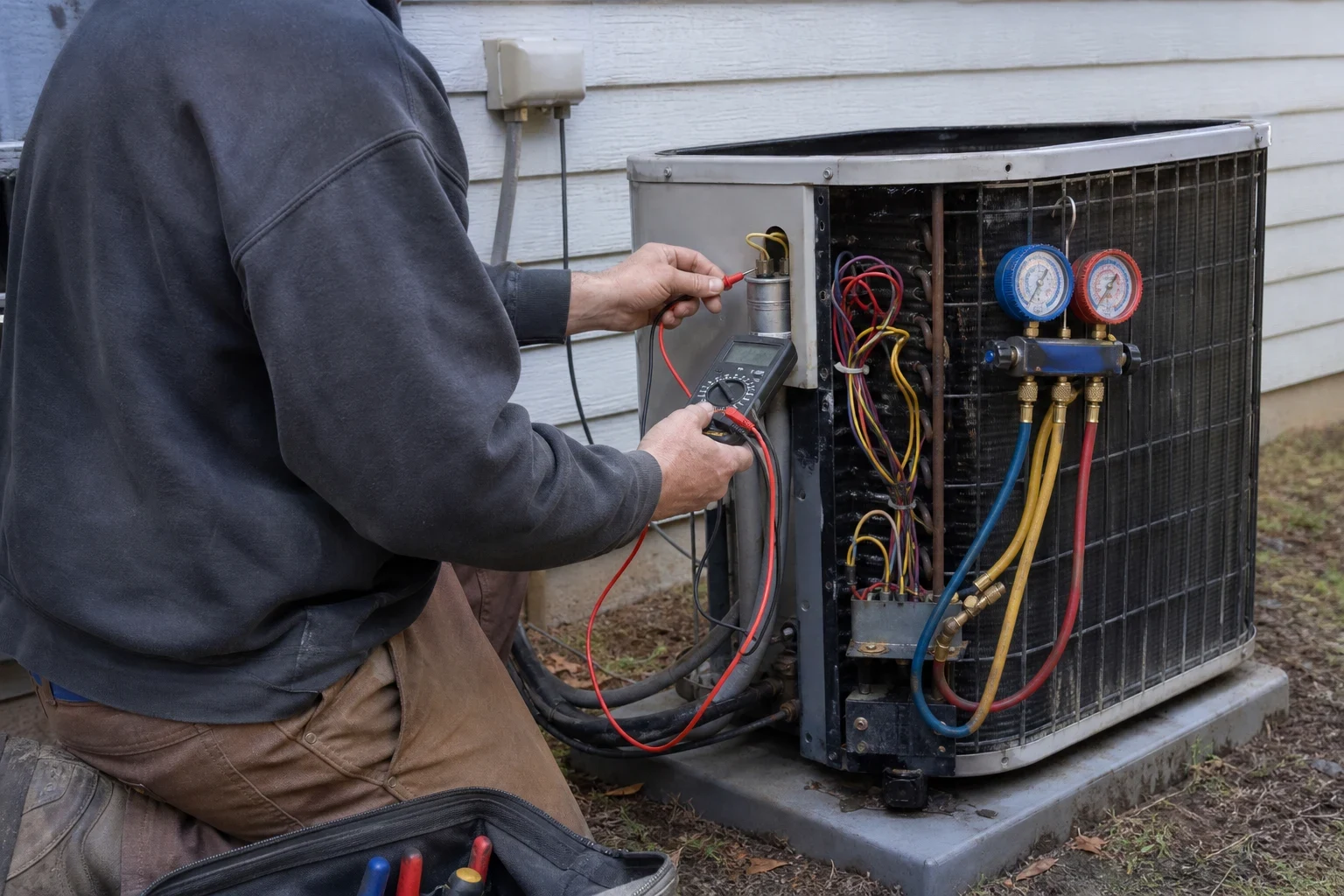
Planning a new home? Let's talk heating and cooling
Tell us about your plans and timeline, and we'll give you a free estimate and a written quote before any work begins. We'll stay in touch once you've moved in, too.